Natural Medicine Handout - Ginger
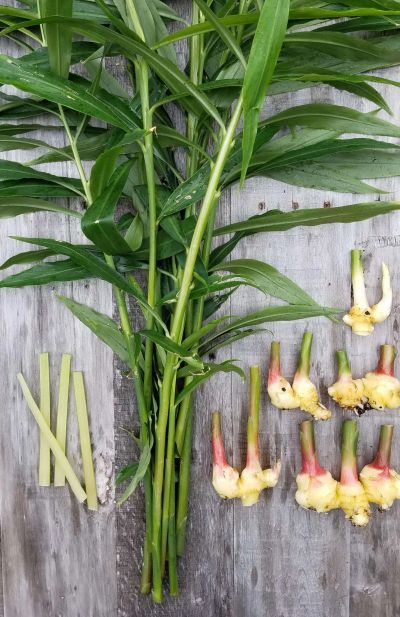
Ginger
What is it?
Ginger (Zingiber officinale) is a plant native to Asia. The ginger spice comes from the roots of the plant. It's used as a food flavoring and medicine.
Ginger contains chemicals that might reduce nausea and swelling. These chemicals seem to work in the stomach and intestines, but they might also help the brain and nervous system to control nausea.
People commonly use ginger for menstrual cramps, osteoarthritis, and morning sickness. It is also used for diabetes, motion sickness, and many other conditions, but there is no good scientific evidence to support most of these uses. There is also no good evidence to support using ginger for COVID-19.
Is it effective?
The Effectiveness ratings for Ginger are as follows:
Possibly Effective
- Menstrual cramps (dysmenorrhea). Taking ginger by mouth during the first 3-4 days of a menstrual cycle somewhat reduces painful menstrual periods. It seems to work about as well as some pain medications, like ibuprofen, mefenamic acid, or Novafen. Taking ginger along with medicines such as mefenamic acid also seems to be helpful.
- Osteoarthritis. Taking ginger by mouth can slightly reduce pain in some people with osteoarthritis. But applying ginger gel or oil to the knee doesn't seem to help.
- Morning sickness. Taking ginger by mouth seems to reduce nausea and vomiting in some people during pregnancy. But it might work slower or not as well as some drugs used for nausea.
Possibly Ineffective
- Nausea and vomiting caused by cancer drug treatment. Taking ginger by mouth doesn't reduce nausea or vomiting caused by chemotherapy.
- Muscle soreness caused by exercise. Taking ginger by mouth doesn't reduce or prevent muscle pain from exercise.
- Motion sickness. Taking ginger by mouth up to 4 hours before travel doesn't prevent motion sickness.
There is interest in using ginger for a number of other purposes, but there isn't enough reliable information to say whether it might be helpful.
Is it safe?
When taken by mouth: Ginger is likely safe. It can cause mild side effects including heartburn, diarrhea, burping, and general stomach discomfort. Taking higher doses of 5 grams daily increases the risk for side effects.
When applied to the skin: Ginger is possibly safe when used short-term. It might cause skin irritation for some people.
Special Precautions and Warnings:
Children: Ginger is possibly safe when taken by mouth for up to 4 days by teenagers around the start of their period.
Pregnancy: Ginger is likely safe when eaten in foods. It is possibly safe when taken by mouth as medicine during pregnancy. It might increase the risk of bleeding, so some experts advise against using it close to the delivery date. But it appears to be safe to use for morning sickness without harm to the baby. Talk to your healthcare provider before using ginger during pregnancy.
Breast-feeding: Ginger is likely safe when eaten in foods. There isn't enough reliable information to know if taking larger amounts of ginger is safe when breast-feeding. Stay on the safe side and avoid use.
Bleeding disorders: Taking ginger might increase your risk of bleeding.
Heart conditions: High doses of ginger might worsen some heart conditions.
Surgery: Ginger might slow blood clotting. It might cause extra bleeding during and after surgery. Stop using ginger at least 2 weeks before a scheduled surgery.
Are there any interactions with medications?
Cyclosporine (Neoral, Sandimmune)
Interaction Rating Minor Be watchful with this combination.
Taking ginger two hours before taking cyclosporine might increase how much cyclosporine the body absorbs. This might increase the side effects of cyclosporine. But ginger does not seem to affect how much cyclosporine the body absorbs when they are taken at the same time.
Losartan (Cozaar)
Interaction Rating Moderate Be cautious with this combination.
Ginger can increase how much losartan the body absorbs. Taking ginger along with losartan might increase the effects and side effects of losartan.
Medications changed by the liver (Cytochrome P450 1A2 (CYP1A2) substrates)
Interaction Rating Minor Be watchful with this combination.
Some medications are changed and broken down by the liver. Ginger might change how quickly the liver breaks down these medications. This could change the effects and side effects of these medications.
Medications changed by the liver (Cytochrome P450 2B6 (CYP2B6) substrates)
Interaction Rating Minor Be watchful with this combination.
Some medications are changed and broken down by the liver. Ginger might change how quickly the liver breaks down these medications. This could change the effects and side effects of these medications.
Medications changed by the liver (Cytochrome P450 2C9 (CYP2C9) substrates)
Interaction Rating Minor Be watchful with this combination.
Some medications are changed and broken down by the liver. Ginger might change how quickly the liver breaks down these medications. This could change the effects and side effects of these medications.
Medications changed by the liver (Cytochrome P450 3A4 (CYP3A4) substrates)
Interaction Rating Minor Be watchful with this combination.
Some medications are changed and broken down by the liver. Ginger might change how quickly the liver breaks down these medications. This could change the effects and side effects of these medications.
Medications for diabetes (Antidiabetes drugs)
Interaction Rating Moderate Be cautious with this combination.
Ginger might lower blood sugar levels. Taking ginger along with diabetes medications might cause blood sugar to drop too low. Monitor your blood sugar closely.
Medications for high blood pressure (Calcium channel blockers)
Interaction Rating Minor Be watchful with this combination.
Ginger might lower blood pressure. Taking ginger along with medications that lower blood pressure might cause blood pressure to go too low. Monitor your blood pressure closely.
Medications moved by pumps in cells (P-Glycoprotein Substrates)
Interaction Rating Minor Be watchful with this combination.
Some medications are moved in and out of cells by pumps. Ginger might change how these pumps work and change how much medication stays in the body. In some cases, this might change the effects and side effects of a medication.
Medications that slow blood clotting (Anticoagulant / Antiplatelet drugs)
Interaction Rating Moderate Be cautious with this combination.
Ginger might slow blood clotting. Taking ginger along with medications that also slow blood clotting might increase the risk of bruising and bleeding.
Metronidazole (Flagyl)
Interaction Rating Minor Be watchful with this combination.
Ginger can increase how much metronidazole the body absorbs. Taking ginger along with metronidazole might increase the effects and side effects of metronidazole.
Nifedipine (Procardia)
Interaction Rating Moderate Be cautious with this combination.
Taking ginger along with nifedipine might slow blood clotting and increase the chances of bruising and bleeding.
Phenprocoumon (Marcoumar, others)
Interaction Rating Moderate Be cautious with this combination.
Phenprocoumon is used to slow blood clotting. Ginger can also slow blood clotting. Taking ginger along with phenprocoumon might increase the chances of bruising and bleeding. Be sure to have your blood checked regularly. The dose of your phenprocoumon might need to be changed.
Warfarin (Coumadin)
Interaction Rating Moderate Be cautious with this combination.
Warfarin is used to slow blood clotting. Ginger can also slow blood clotting. Taking ginger along with warfarin might increase the chances of bruising and bleeding. Be sure to have your blood checked regularly. The dose of your warfarin might need to be changed.
Are there any interactions with supplements?
Herbs and supplements that might lower blood sugar
Ginger might lower blood sugar. Taking it with other supplements with similar effects might lower blood sugar too much. Examples of supplements with this effect include aloe, bitter melon, cassia cinnamon, chromium, and prickly pear cactus.
Herbs and supplements that might slow blood clotting
Ginger might slow blood clotting and increase the risk of bleeding. Taking it with other supplements with similar effects might increase the risk of bleeding in some people. Examples of supplements with this effect include garlic, ginkgo, nattokinase, and Panax ginseng.
Are there any foods to avoid?
There are no known interactions with foods.
How is it typically used?
Ginger is commonly consumed in foods and as a flavoring in drinks. As medicine, ginger is available in many forms, including teas, syrups, capsules, and liquid extracts. Ginger has most often been used by adults in doses of 0.5-3 grams by mouth daily for up to 12 weeks. Ginger is also available in topical gels, ointments, and aromatherapy essential oils. Speak with a healthcare provider to find out what type of product and dose might be best for a specific condition.
What other names is the product known by?
African Ginger, Amomum zingiber, Ardraka, Black Ginger, Cochin Ginger, Gan Jiang, Gingembre, Gingembre Africain, Gingembre Cochin, Gingembre Indien, Gingembre Jamaïquain, Gingembre Noir, Ginger Essential Oil, Ginger Root, Huile Essentielle de Gingembre, Imber, Indian Ginger, Jamaica Ginger, Jengibre, Jiang, Kankyo, Kanshokyo, Nagara, Race Ginger, Racine de Gingembre, Rhizoma Zingiberi, Rhizoma Zingiberis, Rhizoma Zingiberis Recens, Shen Jiang, Sheng Jiang, Shoga, Shokyo, Shunthi, Srungavera, Sunth, Sunthi, Vishvabheshaja, Zingiber officinale, Zingiber Officinale Rhizome, Zingiber Officinalis, Zingiberis Rhizoma, Zingiberis Siccatum Rhizoma, Zinzeberis, Zinziber Officinale, Zinziber Officinalis
Literature Review Current Through: 2/13/2026, Last Updated: 12/19/2024
The contents of this resource are not intended to be a substitute for professional medical advice, diagnosis, or treatment. Clinical input is needed from a qualified healthcare provider before taking any supplement or starting any therapy. Do not delay or disregard seeking medical advice or treatment based on any information displayed in this resource.