Stinging Nettle
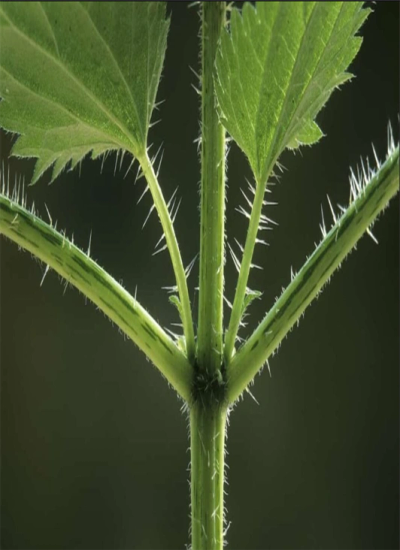
Natural Medicine Herb
Stinging Nettle
Scientific Name Urtica dioica, Urtica urens Family Urticaceae Other Common Names Bichu, Common Nettle, Feuille d'Ortie, Graine d'Ortie, Grande Ortie, Great Stinging Nettle, Nettle, Nettle Leaf, Nettle Seed, Nettle Worth, | Caution
Don't confuse stinging nettle with White Dead Nettle Flower.

Overview
Stinging nettle is an herbaceous plant that grows to 2-4 meters in height, and is characterized by pointed leaves and white to yellowish flowers (91520, 93098). Both the root and leaf are used for medicinal purposes. It was used as a diuretic and laxative during the ancient period of the Greek physicians Dioscorides and Galen (76447). It is listed in the European pharmacopoeia and is used as a wild edible plant in soups and other preparations (39801).
Possibly Safe when used orally and appropriately. Stinging nettle root 360-600 mg has been used safely for up to 1 year (5093, 11230, 15195, 76406, 96744). ...when used topically and appropriately (12490).
PREGNANCY: Likely Unsafe when used orally due to possible abortifacient and uterine-stimulant effects (4, 6, 19).
LACTATION: Insufficient reliable information available; avoid using.
General
Orally, stinging nettle seems to be generally well tolerated.
Most Common Adverse Effects
Orally: Constipation, diarrhea.
Topically: Contact with the raw plant causes itching, rash, and stinging.
Dermatologic
Endocrine
Gastrointestinal
Genitourinary
Hepatic
Other Possibly Effective
Diabetes.
Oral stinging nettle seems to improve glycemic control in patients with diabetes.
Insufficient Reliable Evidence to Rate
It is unclear if oral stinging nettle is beneficial for hay fever.
Although there is interest in using oral stinging nettle for anemia, there is insufficient reliable information about the clinical effects of stinging nettle for this condition.
Although there is interest in using oral stinging nettle for asthma, there is insufficient reliable information about the clinical effects of stinging nettle for this condition. (Admin note: Works for me if freeze dried OR as fresh herb tea)
It is unclear if oral stinging nettle is beneficial for BPH.
Topical stinging nettle has only been evaluated in combination with other ingredients; its effect when used alone is unclear.
Stinging nettle in a mouthwash solution has only been evaluated in combination with other ingredients; its effect when used alone is unclear.
Although there is interest in using oral stinging nettle for gout, there is insufficient reliable information about the clinical effects of stinging nettle for this condition.
It is unclear if oral stinging nettle is beneficial for Gulf war syndrome.
It is unclear if oral stinging nettle is beneficial in patients with hyperandrogenism.
Oral stinging nettle has only been evaluated in combination with other ingredients; its effect when used alone is unclear.
Oral stinging nettle has only been evaluated in combination with other ingredients; its effect when used alone is unclear.
Although there is interest in using topical stinging nettle for myalgia, there is insufficient reliable information about the clinical effects of stinging nettle for this purpose.
Small clinical studies suggest that topical stinging nettle may modestly improve pain in patients with osteoarthritis. It is unclear if oral stinging nettle is beneficial.
It is unclear if oral stinging nettle is beneficial for acute pain.
Oral stinging nettle has only been evaluated in combination with other ingredients; its effect when used alone is unclear.
Although there is interest in using oral stinging nettle for UTIs, there is insufficient reliable information about the clinical effects of stinging nettle for this condition.
More evidence is needed to rate stinging nettle for these uses.
Adult
Oral:
Research is limited; typical dosing is unavailable.
Standardization & Formulation
There is insufficient reliable information available about the standardization of stinging nettle.
ANTIDIABETES DRUGS
Interaction Rating Moderate Be cautious with this combination. Severity MODERATE Occurrence POSSIBLE Level of Evidence B (Lower quality RCT)
Theoretically, stinging nettle might have additive effects with antidiabetes drugs.
DIURETIC DRUGS
Interaction Rating Moderate Be cautious with this combination. Severity MODERATE Occurrence POSSIBLE Level of Evidence D (In vitro or animal study)
Theoretically, combining stinging nettle with diuretic drugs may have additive effects.
LITHIUM
Interaction Rating Moderate Be cautious with this combination. Severity MODERATE Occurrence POSSIBLE Level of Evidence D (In vitro or animal study)
Theoretically, stinging nettle might reduce excretion and increase levels of lithium.
WARFARIN (Coumadin)
Interaction Rating Moderate Be cautious with this combination. Severity HIGH Occurrence POSSIBLE Level of Evidence D (Theoretical based on pharmacology)
There is some concern that stinging nettle might decrease the effects of anticoagulant drugs such as warfarin.
HERBS AND SUPPLEMENTS WITH HYPOGLYCEMIC POTENTIAL
Stinging nettle may lower blood glucose levels.
None known. There is insufficient reliable information available about the presentation or treatment of overdose with stinging nettle.
Excretion
After oral administration of 20 mg of stinging nettle agglutinin in healthy volunteers, 30% to 50% of the dose was excreted in the feces (76447).
General
The applicable parts of stinging nettle are the above ground parts and root. Stinging nettle root contains polysaccharides and fatty acids, including (10E,12Z)-9-Hydroxy-10,12-octadecadienoic acid (11227, 11228, 11229, 76466). Stinging nettle leaf contains several nutrients and active constituents. The leaf is eaten as a food because of significant amounts carotene, vitamin C, vitamin K, potassium, calcium, and magnesium (2, 8, 11, 19, 76425). There is about as much vitamin C and carotene in stinging nettle leaf as in spinach and other greens (5). The leaf also contains beta-sitosterol and the flavonoids quercetin, rutin, kaempferol, and others. The leaf also contains lectins, including agglutinin (76448). The stinging nettle hairs of the leaf contain histamine, acetylcholine, and serotonin (12490, 76420, 76448).
Analgesic effects
Preliminary evidence suggests applying stinging nettle leaf topically might relieve arthritis pain by hyperstimulation, but the exact mechanism for this effect is unknown (12490).
Anti-inflammatory effects
For osteoarthritis and other musculoskeletal conditions, stinging nettle above ground parts might work due to potential anti-inflammatory effects (6500, 12490). Preliminary clinical research shows that stinging nettle extract lowers levels of interleukin (IL)-6 and tumor necrosis factor (TNF)-alpha in humans (76422). Animal research shows that polysaccharides from stinging nettle root extract can reduce inflammation by stimulating T-lymphocyte proliferation, influencing the complementary system, or increasing the release of tumor necrosis factor (TNF)-alpha (76464). Cell culture research shows that stinging nettle root extract may suppress human leukocyte elastase (HLE), a proteinase involved in tissue destruction associated with chronic inflammation (76403). Other cell culture research shows that stinging nettle leaf extract inhibits phytohemagglutinin-stimulated production of interleukin-2 and interferon-gamma (76400), reduces lipopolysaccharide-stimulated production of TNF-alpha and IL-1beta (76437), and inhibits NF-kappaB activation (76444).
Antiallergy effects
Some researchers think that stinging nettle leaf might be beneficial for allergic rhinitis due to its quercetin content. Quercetin is thought to have anti-inflammatory and mast-cell stabilizing effects. It decreases histamine release from basophils and mast cells (483). In clinical research, taking stinging nettle daily for 1 month reduced interferon-gamma (IFN-gamma) levels compared to placebo. However, stinging nettle did not alter clinical symptoms of allergic rhinitis, nasal smear eosinophil levels, or serum levels of IgE, interleukin-4 (IL-4), or interleukin-5 (IL-5), (96743).
Anticancer effects
Agglutinin, a lectin derived from stinging nettle root, has been shown to inhibit the binding of epidermal growth factor to its receptor in epidermoid carcinoma cells (76467). Epidermal growth factor receptor signaling plays a role in the cancer cell proliferation, apoptosis, angiogenesis, and metastasis.
Antifungal effects
Cell culture research shows that lectins isolated from stinging nettle root extracts have fungistatic effects (76408, 76446).
Antiviral effects
Cell culture research shows that lectins from stinging nettle can inhibit human immunodeficiency virus (HIV), cytomegalovirus, respiratory syncytial virus (RSV), and influenza A virus replication (76404). Other cell culture research shows that stinging nettle agglutinin can prevent the entry of HIV and simian immunodeficiency virus (SIV) into target cells (76411).
Cardiovascular effects
Animal research shows that giving an extract of stinging nettle above ground parts intravenously can reduce blood pressure via diuretic and natriuretic effects (76402). Also, the leaf juice can increase urine output and slightly decrease systolic blood pressure and body weight in people with venous insufficiency (1, 11).
CNS effects
Stinging nettle seems to lower body temperature, and have CNS depressant and anti-seizure activity (4, 6, 11).
Hypoglycemic effects
Some cell culture and animal research shows that stinging nettle leaf can increase the secretion of insulin from the pancreas (93100). Other cell culture research shows that stinging nettle leaf extract can inhibit peroxisome proliferator-activated receptor (PPAR)-gamma activity (94101). Additional cell culture research shows that stinging nettle above ground parts can inhibit alpha-glucosidase activity (94102, 94103).
Lactation effects
There is interest in using stinging nettle to stimulate breast milk production. A very small clinical trial in lactating adults in Iran shows that taking stinging nettle 15 drops orally three times daily for 4 weeks improves infant feeding frequency, the number of wet diapers, defecation frequency, and diaper weight when compared with placebo drops (115676). However, milk production was not measured and it is unclear if the people in the study had lactation insufficiency prior to enrollment.
Prostate-related effects
There is interest in using stinging nettle for prostate disease, including benign prostatic hyperplasia (BPH) and prostate cancer. Preliminary research shows that an aqueous extract of stinging nettle leaves can decrease adenosine deaminase activity in prostate tissue from patients with localized prostate cancer (15196). Animal and cell culture research shows that stinging nettle root extract can reduce the proliferation of prostate cancer cells (11227, 76398). In vitro research shows that lignans from stinging nettle root interfere with the binding of dihydrotestosterone (DHT) to sex hormone binding globulin (SHBG) (11228). The binding of DHT and SHBG stimulates the growth of prostate cancer (93099). By interfering with this binding, stinging nettle is believed to reduce prostate cancer growth.
Stinging nettle root extract also appears to inhibit the binding of SHBG to its receptor on the surface of prostate cells. By interfering with the binding of SHBG to its receptor, stinging nettle root extract may prevent estrogen-induced amplification of the androgen signal, which is thought to promote hyperplasia (76435).
Stinging nettle contains beta-sitosterol (15196). Laboratory research suggests beta-sitosterol might have antiproliferative effects on the prostate, possibly by inhibiting growth factors (11234). In animals, beta-sitosterol shrinks the prostate, but this has not been shown in humans (11759). Some preliminary evidence also shows that extracts of stinging nettle can inhibit prostate tissue growth (15196).
Aromatase is an enzyme responsible for the conversion of androgens into estrogens. Estrogens appear to be involved in the etiology of benign prostatic hyperplasia (BPH). Therefore, inhibition of aromatase could improve BPH (76465). Some constituents of the methanol extract of stinging nettle root demonstrated weak-to-moderate aromatase inhibition (76403, 76447, 76461, 76466).
There is also some preliminary research showing that stinging nettle can inhibit 5-alpha reductase enzyme (76461). This enzyme is believed to play a role in the pathogenesis of benign prostatic hyperplasia. However, other preliminary research shows that stinging nettle root extract does not inhibit 5-alpha reductase (70232).
Preliminary research shows that stinging nettle root extract inhibits the sodium-potassium pump in human prostatic hyperplastic tissue (76434, 76447). Inhibition of the sodium-potassium pump may reduce prostate cell metabolism and growth (76434).
Classes
5-Alpha Reductase Inhibitors, Diuretics, Hypoglycemic Agents
References
Literature Review Current Through: 1/21/2026, Last Updated: 7/4/2026
The contents of this resource are not intended to be a substitute for professional medical advice, diagnosis, or treatment. Clinical input is needed from a qualified healthcare provider before taking any supplement or starting any therapy. Do not delay or disregard seeking medical advice or treatment based on any information displayed in this resource.