Herb - Panax ginseng
Natural Medicine Handout
Panax ginseng (notoginseng)
Scientific Name Panax notoginseng (synonyms: Aralia quinquefolia var. notoginseng, Panax pseudoginseng var. notoginseng) Family Araliaceae Other Common Names: Chai-Jen-Shen, Field Seven, Noto-Gin, Notoginseng, Panax Notoginseng Radix, Radix Notoginseng, Samch'il, San Qi, San Qui, Sanchi, Sanchi Ginseng,
Caution Do not confuse Panax notoginseng with the similarly named plants, Panax Ginseng and American Ginseng.
Overview
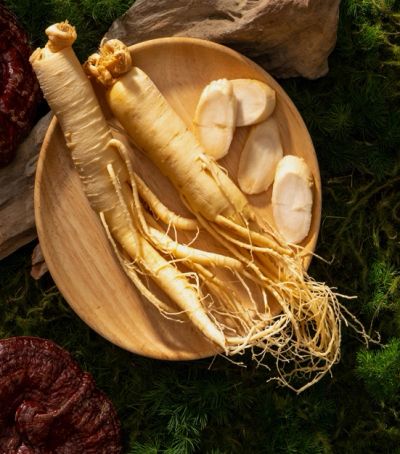
Panax ginseng is a perennial plant that grows in the mountains in Yunnan province in Southwest China (94323, 94324, 94378). The root, which is harvested after 3-5 years of growth, is most commonly used medicinally (94324). The fruits, flower, and leaves of Panax ginseng plants that have grown for at least 3 years are also used (94378).
Possibly Safe when used orally and appropriately, short-term. Panax notoginseng has been used with apparent safety in doses of 100-400 mg 1-3 times daily for up to 6 weeks (17183, 94321, 94326, 94378, 94384, 109674). ...when given as an injection, under medical supervision. Panax notoginseng extract has been used with apparent safety in doses of 400-800 mg daily for up to 10 weeks (94324, 94326, 94373, 98976, 109523).
There is insufficient reliable information available about the safety of Panax notoginseng when administered rectally.
PREGNANCY AND LACTATION: Likely Unsafe when used orally (5559). Ginsenoside Rb1, an active constituent of Panax notoginseng, has teratogenic effects in animal models (10447).
General
Panax notoginseng seems to be generally well tolerated when used orally or intravenously.
Most Common Adverse Effects
Orally: Dry mouth, flushed skin, insomnia, nausea, nervousness, rash, vomiting.
Intravenously: Headache, itching, rash.
Serious Adverse Effects (Rare)
Intravenously: Fever, pustular drug eruption.
- Dermatologic
- Gastrointestinal
- Immunologic
- Neurologic/CNS
Low-quality clinical research shows that oral or intravenous Panax notoginseng may improve the frequency and severity of angina symptoms.
Low-quality clinical research shows that intravenous Panax notoginseng saponins may improve recovery and mortality in patients with intracranial hemorrhage.
Low-quality clinical research in patients with ischemic stroke shows that oral or intravenous Panax notoginseng may improve recovery as well as neurologic and functional scores.
Low-quality clinical research shows that oral Panax notoginseng may not reduce the risk of MI in patients with coronary heart disease.
Insufficient Reliable Evidence to Rate
Although there has been interest in using oral Panax notoginseng for atherosclerosis, there is insufficient reliable information about the clinical effects of Panax notoginseng for this purpose.
It is unclear if oral Panax notoginseng is beneficial for improving athletic performance.
Although there has been interest in using oral Panax notoginseng for bleeding, there is insufficient reliable information about the clinical effects of Panax notoginseng for this purpose.
Although there has been interest in using topical Panax notoginseng for bruises, there is insufficient reliable information about the clinical effects of Panax notoginseng for this purpose.
It is unclear if oral Panax notoginseng is beneficial for improving platelet aggregation and coagulation in patients with CHD.
It is unclear if oral Panax notoginseng is beneficial for reducing exercise-induced muscle soreness.
Although there has been interest in using oral Panax notoginseng for hepatitis, there is insufficient reliable information about the clinical effects of Panax notoginseng for this purpose.
Although there has been interest in using oral Panax notoginseng for hypertension, there is insufficient reliable information about the clinical effects of Panax notoginseng for this purpose.
Although there has been interest in using oral Panax notoginseng for NASH, there is insufficient reliable information about the clinical effects of Panax notoginseng for this purpose.
Oral Panax notoginseng has only been evaluated in combination with other ingredients; its effect when used alone is unclear.
Although there has been interest in using oral Panax notoginseng for RA, there is insufficient reliable information about the clinical effects of Panax notoginseng for this purpose.
Rectal Panax notoginseng has only been evaluated in combination with other ingredients; its effect when used alone is unclear.
It is unclear if oral or intravenous Panax notoginseng is beneficial for the prevention of postoperative deep vein thrombosis (DVT).
More evidence is needed to rate Panax notoginseng for these uses.
Adult
Oral:
Panax notoginseng has most commonly been used in doses of 100-400 mg 1-3 times daily for up to 6 weeks. See Effectiveness section for condition-specific information.
Intravenous:
Panax notoginseng has most commonly been used in doses of 200-400 mg once or twice daily for up to 10 weeks. See Effectiveness section for condition-specific information.
Standardization & Formulation
In clinical trials, Panax notoginseng has been given orally or as an injection. Oral products have included extracts and powders (17183, 94320, 94321, 94384). Common oral products have included Xuesaitong soft capsules or Sanqi guanxinning tablets (94321). Xuesaitong soft capsules contain 60 mg saponins per 120 mg capsule (94321). Products for intravenous use have included Xuesaitong, Xueshuantong, Lulutong, and Sanqi Zaotang (94324). A specific product, Xueshuantong injection (XSTI), is primarily comprised of saponins derived from the root and rhizome of Panax notoginseng (98976).
ASPIRIN
Interaction Rating Moderate Be cautious with this combination. Severity MODERATE Occurrence POSSIBLE Level of Evidence D (Theoretical based on pharmacology)
Theoretically, taking Panax notoginseng concomitantly with aspirin may increase the risk of adverse effects from both products.
CAFFEINE
Interaction Rating Moderate Be cautious with this combination. Severity MODERATE Occurrence POSSIBLE Level of Evidence D (In vitro or animal study) Theoretically, taking Panax notoginseng may decrease the levels and clinical effects of caffeine.
CYTOCHROME P450 1A2 (CYP1A2) SUBSTRATES
Interaction Rating Moderate Be cautious with this combination. Severity MODERATE Occurrence POSSIBLE Level of Evidence D (In vitro or animal study) Theoretically, taking Panax notoginseng might reduce the levels and clinical effects of CYP1A2 substrates.
WARFARIN (Coumadin)
Interaction Rating Moderate Be cautious with this combination. Severity MODERATE Occurrence POSSIBLE Level of Evidence D (In vitro or animal study) Theoretically, taking Panax notoginseng concomitantly with warfarin may increase the risk of bleeding.
HORMONE SENSITIVE CANCERS/CONDITIONS
None known. There is insufficient reliable information available about the presentation or treatment of overdose with Panax notoginseng.
Absorption
The ginsenoside Rb1 has a low oral bioavailability from Panax notoginseng in animal research (11153, 94324).
Distribution
When given intravenously, the notoginsenoside derivative panaxatrol disuccinate sodium declined rapidly in the plasma and had a broad distribution (94325).
Metabolism
Clinical research suggests that parent ginsenosides from Panax notoginseng are deglycosylated into active metabolites by enzymes secreted from the gut microbiota. These metabolites include ginsenoside F1, protopanaxatriol, ginsenoside Rh2, ginsenoside compound K and protopanaxadiol (98975).
Excretion
The ginsenoside Rg1 is rapidly eliminated from the blood in animal models (11153). The elimination rate of ginsenosides varies. Ginsenoside Rb1 has a slower clearance (94324).
General
The applicable parts of Panax notoginseng are the root, flowers, fruits, and leaves. The root is most commonly used medicinally (94323). Panax notoginseng root contains 12% saponins; the most important are triterpenoid saponins, which are referred to collectively as ginsenosides or panaxosides (94323). Ginsenosides is the term developed by Asian researchers, and the term panaxosides was developed by Russian researchers. Numerous subtypes of ginsenosides have been identified. Panax notoginseng contains notoginsenosides R1 and R2, as well as the ginsenosides Rb1 and Rg1, and lesser amounts of Rd and Re (11153, 12536, 94323, 94325). The individual ginsenosides have been reported to have opposing effects (14802). Processing of the root, by steaming or baking, can alter levels of the individual saponins (4378). The saponins are found throughout the plant. However, different types of saponins are enriched in different parts of the plant (94323).
Although the saponins are thought to be the most important constituents for medicinal purposes, other constituents include flavonoids, cyclodipeptides, sterols, polyacetylenes, and volatile constituents such as terpenes (94323).
Angiogenic effects
The individual ginsenosides have been reported to have opposing effects on angiogenesis in vitro. For example Rg1 has been reported to stimulate angiogenesis, while Rb1 seems to inhibit angiogenesis (14802).
Anti-cancer effects
Although this has not been shown in humans, Panax notoginseng and some saponin constituents have shown anti-cancer effects in laboratory models. Panax notoginseng seems to inhibit proliferation of cancer cells and induce apoptosis (94323).
Anti-inflammatory effects
Panax notoginseng is traditionally used for inflammatory conditions such as muscle soreness, rheumatoid arthritis, and swelling. Laboratory research suggests that Panax notoginseng contains constituents that can inhibit the production of inflammatory cytokines and prostaglandins. The anti-inflammatory effects of Panax notoginseng might also result in the protection of various organs and tissues in the body, including the nervous system, the kidneys, and the liver (94323).
Antidiabetic effects
Some research in non-diabetic humans suggests that unlike some other ginsengs, Panax notoginseng doesn't affect postprandial blood glucose levels (12536, 94318). However, other research suggests that taking Panax notoginseng daily for 3 days reduces postprandial glucose levels by approximately 20%, especially 30 minutes into an oral glucose tolerance test (94318). It is possible that the dosing schedule plays a role in these differences. Taking Panax notoginseng for a few days prior to testing, as well as just before testing, may be needed to see measurable effects on blood glucose levels during an oral glucose test (94318). Animal research suggests that Panax notoginseng saponins can improve blood glucose levels by improving insulin sensitivity (94323).
Antifungal effects
Pananotin, a protein isolated from Panax notoginseng root, seems to have antifungal activity, according to preliminary research in vitro (11485).
Antiviral effects
Pananotin, a protein isolated from Panax notoginseng root, seems to have antiviral activity, according to preliminary research. It appears to inhibit HIV reverse transcriptase in vitro (11485, 11486).
Blood vessel effects
Panax notoginseng is believed to dilate the coronary vessels, reduce vascular resistance, and improve the coronary collateral circulation. This could increase blood flow while reducing blood pressure. It could also reduce the heart metabolic rate and oxygen consumption (5558, 94323).
Cardiovascular effects
Panax notoginseng has been shown to have cardiovascular benefits in laboratory and in vitro models. Panax notoginseng protects myocardial cells, possibly by reducing oxidative stress or pro-inflammation cellular signaling as shown with Panax notoginseng extract and some constituents (6289, 94323). Evidence suggests Panax notoginseng also has an antiarrhythmic effect (5558). Evidence from animal research suggests that Panax notoginseng might reduce atherosclerosis. This is likely due to its lipid lowering and anti-inflammatory properties (11487, 94323). Certain constituents of Panax notoginseng, including ginsenoside Rg1, have been associated with coagulation effects, including antiplatelet and antithrombotic activity (11487, 17183, 94323, 96220). Thus, some Panax notoginseng constituents might be helpful to protect against cardiovascular diseases.
Coagulation effects
There is interest in using Panax notoginseng for antithrombotic and antiplatelet effects. However, some ginsenosides have been shown to promote platelet aggregation. In contrast, a concentrated Panax notoginseng extract called sanchitongtshu, containing 80% saponins, primarily ginsenoside Rg1, inhibits platelet aggregation, decreases blood viscosity, increases fibrinolysis, and promotes vascular endothelial nitric oxide release (17183, 94323). A meta-analysis of clinical research in humans also shows that using Panax notoginseng injection for 3-14 days reduces D-dimer levels and increases prothrombin time and activated partial thromboplastin clotting time. However, the validity of these findings is limited by high heterogeneity (105510).
Animal and laboratory research shows that Panax notoginseng reduces platelet aggregation by blocking the release of peroxisome proliferator-activated receptor-gamma (PPAR-gamma) from thrombin-activated platelet cells; the mechanism of action of this inhibited release is unclear (96220). Animal research also suggests that orally administered Panax notoginseng root can reduce fibrinogenemia, an increased level of fibrinogen in the blood (11487). Other animal research in rats shows that taking Panax notoginseng 118.8 mg/kg orally daily for 4 weeks, in addition to dual antiplatelet therapy, further enhances platelet inhibition when compared with dual antiplatelet therapy alone (109675).
Hemostatic effects
Preliminary information suggests the dried root of Panax notoginseng applied topically may be useful as a hemostatic agent because it appears to shorten bleeding time (4056). Some ginsenosides have been shown to promote platelet aggregation (94323). This suggests that Panax notoginseng is useful in the healing of wounds. Other animal research in rats shows that taking Panax notoginseng 118.8 mg/kg orally daily for 4 weeks reduces gastric mucosal damage from dual antiplatelet therapy when compared with control (109675).
Hormonal effects
In vitro research shows that Panax notoginseng has estrogen-like activity. Studies on human breast cancer cells indicate that Panax notoginseng root, specifically its constituent ginsenonside-Rg1, acts as a phytoestrogen by stimulating human breast cancer cell proliferation (11488).
Immune effects
Although clinical evidence is lacking, laboratory research suggests that saponins from Panax notoginseng have various stimulatory effects on the immune system (94323). Further research is needed to determine if this might be useful for helping the immune system.
Muscle protective effects
In humans, Panax notoginseng has a small benefit for preventing delayed muscle soreness following exercise. The mechanism is still not clear. However, there is some evidence of a small effect on inflammatory cytokines (94320).
Classes
Cytochrome P450 1A2 (CYP1A2) Inducers
References
Literature Review Current Through: 9/16/2025, Last Updated: 7/5/2026
The contents of this resource are not intended to be a substitute for professional medical advice, diagnosis, or treatment. Clinical input is needed from a qualified healthcare provider before taking any supplement or starting any therapy. Do not delay or disregard seeking medical advice or treatment based on any information displayed in this resource.