Herb-Hawthorn
Natural Medicine Handout
Hawthorn
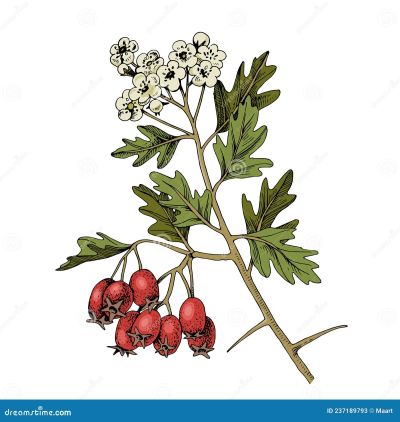
Hawthorn is a flowering shrub of the rose family grown throughout North and South American, Europe, and Asia (113113). Multiple species are commonly found in Hawthorn preparations, including: C. laevigata, C. oxyacantha, C. monogyna and C. mexicana (54659, 54662, 54665, 113112, 113113). Traditionally, hawthorn has been used orally to improve digestion and blood circulation, and for asthma, diarrhea, parasitic infections, and kidney and bladder disorders. Topically, hawthorn has traditionally been used as a poultice or wash for boils, sores, ulcers, itching, and frost bite.
In January 2024, the FDA issued a warning to the public to avoid some hawthorn root extract supplements derived from Mexican Hawthorn root, also known as tejocote (Crataegus mexicana), because they may be contaminated or adulterated with toxic yellow oleander which can lead to gastrointestinal, neurological, and cardiovascular adverse effects that may be severe, or even fatal. The FDA further advises anyone who has taken the tejocote Hawthorn root extract products listed in their warning letter to contact their health care provider immediately for health evaluation (113114).
Possibly Safe when used orally and appropriately, short-term. Hawthorn preparations in doses of up to 1800 mg daily seem to be safe when used for up to 16 weeks. Although hawthorn might be safe for long-term use, current studies have not evaluated safety past 16 weeks (8279, 8280, 8281, 10144, 17203, 104689).
There is insufficient reliable information available about the safety of hawthorn when used topically.
PREGNANCY AND LACTATION: Insufficient reliable information available; avoid using.
Scientific Name Crataegus cuneata (synonyms: Crataegus kulingensis, Crataegus mexicana, Crataegus pentagyna, Crataegus pinnatifida, Crataegus rhipidophylla), Crataegus laevigata (synonyms: Crataegus oxyacantha, Mespilus laevigata), Crataegus monogyna Family Rosaceae Other Common Names Aubepine, Aubépine, Aubépine Blanche, Aubépine Épineuse, Bianco Spino, Bois de Mai, Cenellier, Chinese Hawthorn, Crataegi Flos, Crataegi Folium,
General
Orally, hawthorn seems to be well tolerated when used appropriately. Topically, no adverse effects have been reported, although a thorough evaluation of safety outcomes has not been conducted.
Serious Adverse Effects (Rare)
Orally: Multiorgan hypersensitivity reactions resulting in acute renal failure have been reported rarely.
Cardiovascular
Orally, tachycardia (with facial pains) of uncertain relationship to hawthorn was reported in a multicenter clinical trial (54640). Palpitations (19244) were reported in three patients in a large surveillance trial of 3,664 patients with cardiac failure (54692) and in 11 patients with congestive heart failure (CHF) in a literature review of 5,577 patients (19247). Circulation failure has been reported in two patients with CHF in a literature review of 5,577 patients (19247). Incidences of hospitalization, hospitalization due to CHF, worsening of CHF, angina, and atrial fibrillation have also been reported with the use of hawthorn extract WS 1442 (Crataegutt forte), although it is unclear if these events are related to hawthorn supplementation or existing CHF (19222). In clinical trials, chest pain (8281), short-term increases in blood pressure (19240), and other non-specific heart problems (17203) have also been reported following the use of various hawthorn preparations (e.g. WS 1442, Korodin).
Orally, severe bradycardia, bradypnea, and Mobitz type 1 second degree heart block have been reported in a 16-year-old female who consumed Hawthorn root extract. Blood tests indicated plasma digoxin levels in the therapeutic range, despite no history of digoxin use. Medical treatment for digoxin cardiotoxicity did not improve symptoms. Symptoms gradually normalized over 3 days after discontinuation of the product (113112). Similarly, a 40-year-old female presented with bradycardia and elevated plasma digoxin levels after taking hawthorn root extract 196 mg daily for 2 days with no history of digoxin use. Symptoms resolved within 24 hours (113113).
Insufficient Reliable Evidence to Rate
It is unclear if oral hawthorn is beneficial in patients with angina.
Oral hawthorn has only been evaluated in combination with other ingredients; its effect when used alone is unclear.
Although there has been interest in using oral hawthorn for arrhythmia, there is insufficient reliable information about the clinical effects of arrhythmia for this condition.
Although there has been interest in using oral hawthorn for atherosclerosis, there is insufficient reliable information about the clinical effects of arrhythmia for this condition.
Although there has been interest in using oral hawthorn for CVD, there is insufficient reliable information about the clinical effects of arrhythmia for this condition.
Oral hawthorn has only been evaluated in combination with other ingredients; its effect when used alone is unclear.
The evidence on the effects of oral hawthorn in patients with CHF is conflicting. Although some older research suggests it may be beneficial, more recent, larger studies suggest it may actually increase the risk for complications.
Although there has been interest in using oral hawthorn for hyperlipidemia, there is insufficient reliable information about the clinical effects of arrhythmia for this condition.
It is unclear if oral hawthorn is beneficial for lowering blood pressure.
Oral hawthorn has only been evaluated in combination with other ingredients; its effect when used alone is unclear.
Oral hawthorn has only been evaluated in combination with other ingredients; its effect when used alone is unclear.
More evidence is needed to rate hawthorn for these uses.
Adult Dosage
Oral:
Hawthorn extract has most often been used as 160-1200 mg daily in divided doses. See Effectiveness section for condition-specific information.
Hawthorn extract used in clinical trials has commonly been standardized to a range of 17.3% to 20.1% oligomeric procyanidins (17203, 19226, 8280, 8281, 104689).
Children
Research is limited; typical dosing is unavailable.
Standardization & Formulation
Hawthorn extract WS 1442 (Crataegutt forte) has been standardized to a range of 17.3% to 20.1% oligomeric procyanidins (17203, 19226, 104689), while some studies have reported specific standardization to 18.75% (8280, 8281) or 84.3 mg oligomeric procyanidins (16824). The U.S. brand HeartCare (Nature's'Way) is also standardized in this fashion.
Hawthorn extract LI 132 (Faros 600) has been standardized to 2.2% flavonoids (19245). Crataesor has been standardized to 5% procyanidins and 2% flavonoids (19241). Hawthorn Supreme System Support liquid phyto-caps (250 mg) has been standardized to 50 mg oligomeric procyanidins (19244). Korodin has been standardized to contain 97.3 gram fluid extract from fresh hawthorn berries, 2.5 grams natural D-camphor, and 0.2 grams menthol as an aromatic ingredient per 100 grams (91504).
ANTICOAGULANT/ANTIPLATELET DRUGS
Interaction Rating Moderate Be cautious with this combination. Severity HIGH Occurrence POSSIBLE Level of Evidence D (Theoretical based on pharmacology) Theoretically, hawthorn may increase the risk of bleeding if used with anticoagulant or antiplatelet drugs.
BETA-BLOCKERS
Interaction Rating Moderate Be cautious with this combination. Severity MODERATE Occurrence POSSIBLE Level of Evidence D (Theoretical based on pharmacology) Theoretically, concomitant use might cause additive effects on blood pressure and heart rate.
CALCIUM CHANNEL BLOCKERS
Interaction Rating Moderate Be cautious with this combination. Severity MODERATE Occurrence POSSIBLE Level of Evidence D (Theoretical based on pharmacology) Theoretically, concomitant use might cause additive coronary vasodilation and hypotensive effects.
DIGOXIN (Lanoxin)
Interaction Rating Moderate Be cautious with this combination. Severity MODERATE Occurrence POSSIBLE Level of Evidence D (Theoretical based on pharmacology) Theoretically, hawthorn might potentiate the effects and adverse effects of digoxin.
NITRATES
Interaction Rating Major Do not take this combination. Severity HIGH Occurrence PROBABLE Level of Evidence D (Theoretical based on pharmacology) Theoretically, concomitant use might cause additive coronary vasodilatory effects.
PHOSPHODIESTERASE-5 INHIBITORS
Interaction Rating Major Do not take this combination. Severity HIGH Occurrence PROBABLE Level of Evidence D (Theoretical based on pharmacology) Theoretically, concomitant use might result in additive vasodilation and hypotension.
ANTICOAGULANT/ANTIPLATELET HERBS AND SUPPLEMENTS
Theoretically, hawthorn may have antiplatelet effects in some people.
HERBS AND SUPPLEMENTS WITH HYPOTENSIVE EFFECTS
Hawthorn might have hypotensive effects (12595). Theoretically, concomitant use of hawthorn with other herbs and supplements that decrease blood pressure might increase the risk of hypotension.
HEART FAILURE
PERIOPERATIVE
DIGOXIN ASSAY
There is insufficient reliable information available about the presentation or treatment of overdose with hawthorn.
There is insufficient reliable information available about the pharmacokinetics of hawthorn.
General
The applicable parts of hawthorn are the leaves, berries, flowers, and roots. Major pharmacologically active components are believed to be flavonoids, particularly the oligomeric proanthocyanidins (OPCs) such as procyanidin B2, procyanidin clusters (DP 4, 5, 6), catechin, and epicatechin (54659, 54662, 54665). Other known constituents include caffeic acid, chlorogenic acid, hesperidin, hyperoside, myricitrin, oleanolic acid, O-methyoxyphenethylamine, phenylethylamine, quercitrin, rutin, tocopherols, tyramine, ursolic avid, vitamin C, isovitexin, vitexin, vitexin-2-O-rhamnoside, and vitexin rhamnoside (19241, 54657, 54662).
Antineoplastic effects
Hawthorn may exhibit antineoplastic activity and collagen stabilizing actions. Two triterpenes, uvaol and ursolic acid, were isolated from hawthorn and suggested to be responsible for cytotoxicity against human and murine cancer cell lines (54641). Triterpene-enriched fractions of hawthorn extract have demonstrated almost complete inhibition of cultured larynx cancer cell growth and stronger in vitro activity than 6-mercaptopurine solution(54695). The exact mechanism of action is not well understood.
Antioxidant effects
Free radical properties have been demonstrated in vivo (54682, 54699), and may depend on the phenol (54681) or flavonoid content of the extract.
Antiplatelet effects
In vitro and animal research shows that hawthorn extract can inhibit ADP- and epinephrine-induced platelet aggregation and prolong bleeding time (95528, 95529, 95530, 95531). The extracts inhibit synthesis of thromboxane A2, a stimulator of platelet aggregation. The active constituents are thought to include flavonoids and sesquiterpenes (95529, 95531). However, the effect of hawthorn on platelet aggregation in humans is conflicting. One observational study shows that taking hawthorn shortly before undergoing cardiovascular surgery is associated with a 9% higher incidence of postoperative bleeding compared with never consuming hawthorn (95527). However, clinical research shows that taking a specific preparation of dried hawthorn leaves and flowers (Crataesor, Soria Natural Lab) 800 mg three times daily for 15 days does not affect platelet aggregation or levels of thromboxane B2, the metabolite of thromboxane A2, in healthy humans (54664). These conflicting results may be due to the use of different hawthorn species, extracts, and doses.
Cardiovascular effects
Hawthorn preparations have been traditionally used for cardiovascular conditions (98380). Hawthorn acts on the myocardium by increasing force of contraction and lengthening the refractory period, increasing coronary blood flow and cardiac output, and reducing oxygen consumption (10144, 11450, 12595). Hawthorn's cardiotrophic properties are attributed to increased membrane permeability for calcium (11450), and phosphodiesterase inhibition, which increases intracellular cAMP. Increased cAMP leads to increased coronary blood flow, vasodilation, and positive inotropic effects (11450, 12595). Hawthorn seems to have hypotensive and vasodilatory activity. In a human study, hawthorn extract had beneficial effects on endothelial function (104689). In animals, it seems to cause peripheral vasodilation and to induce endothelium-dependent arterial relaxation. The proantocyanidin constituents seem to be responsible for this effect (12595).
There is also interest in using hawthorn for reducing arrhythmic events (12595). One theory is that hawthorn might reduce arrhythmias by reducing adrenergic stimulation. In vitro, hawthorn leaf extract had a dose-dependent negative chronotropic effect on cardiac muscle cells. This effect is thought to be due to beta-adrenergic receptor blockade similar to propranolol (98380). However, this effect has not been confirmed in humans. Another theory is that hawthorn might block potassium channels, prolong action potential repolarization, and prolong the QT interval similarly to class III antiarrhythmic agents. Preliminary studies in animal models support this theory. However, a small clinical trial in healthy adults shows that a single dose of hawthorn 160 mg orally has no effect on electrocardiographic measures such as QT, PR and QRS intervals (98381).
Finally, some preliminary research in humans and animals suggests hawthorn might lower serum cholesterol, low-density lipoprotein (LDL) cholesterol, and/or triglycerides (12595, 104689). In an animal model, hawthorn seems to lower accumulation of lipids in the liver and aorta. The fruit extract may lower cholesterol by increasing bile acid excretion, reducing cholesterol synthesis by the liver, and enhancing LDL-receptor activity. Hawthorn also seems to have antioxidant activity (12595).
Dermatologic effects
Skin aging is caused by exposure to ultraviolet (UV) A and B rays from sunlight. There is interest in using polyphenols from hawthorn to protect from UVB radiation damage to slow skin aging. Preliminary research in human skin cell lines and in animal models shows that hawthorn polyphenol extract increases activity of antioxidant enzymes and reverses oxidative stress caused by UVB irradiation. Hawthorn extract also seems to reduce epidermal thickening and increase collagen production, which might help to reduce wrinkles and skin damage from UVB radiation (98379).
Classes
Antiplatelet Agents, Phosphodiesterase Inhibitors, Vasodilators
References
Literature Review Current Through: 3/23/2026, Last Updated: 7/6/2026
The contents of this resource are not intended to be a substitute for professional medical advice, diagnosis, or treatment. Clinical input is needed from a qualified healthcare provider before taking any supplement or starting any therapy. Do not delay or disregard seeking medical advice or treatment based on any information displayed in this resource.